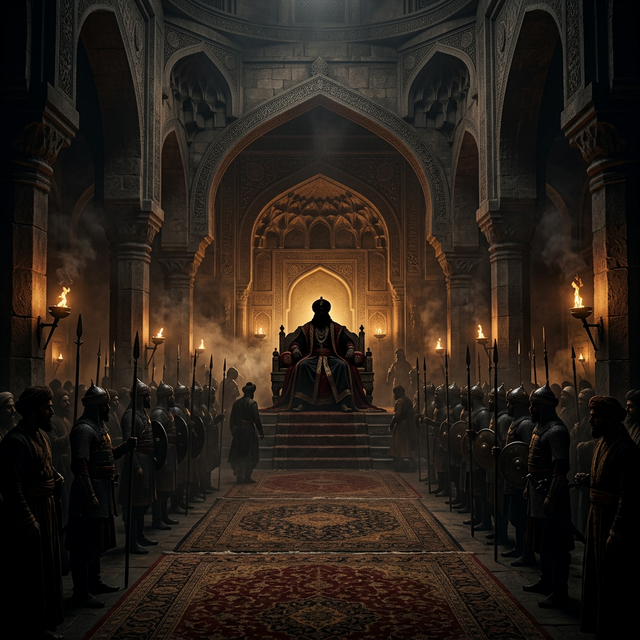
Dark atmospheric scene of the Delhi Sultanate court under Muhammad bin Tughlaq — a brooding throne room with massive stone pillars, oil lamps, silhouetted sultan on raised throne, Islamic arches and armed soldiers, representing the oppressive reign that devastated India

Muhammad bin Tughlaq The Untold History of the Sultanate's Most Destructive Ruler

What your textbooks never taught you. A comprehensive, source-backed encyclopedia chronicling the atrocities, catastrophic experiments, and civilizational damage inflicted during the 26-year reign of Sultan Muhammad bin Tughlaq (1325–1351 CE) — the man who emptied Delhi, collapsed India's economy, and caused suffering on a scale unmatched by any Delhi Sultan.

Scroll to explore
📊 The Scale of Destruction

The Numbers They Don't Teach

Documented by medieval chroniclers, archaeological evidence, and primary sources — the catastrophic scale of Muhammad bin Tughlaq's 26-year reign over India.

👑
0
Years of Sultanate Rule
Reign: 1325–1351 CE
🏙️
0
Forced Capital Transfer Distance
Delhi to Daulatabad (and back), 1327 CE
☠️
0
Estimated Deaths — Deccan Famine
Barani & Ibn Batuta document mass death under his policies
💰
0
Treasury Emptied — Token Currency Debacle
Brass coins devalued entire economy; Barani, 1357 CE
⚔️
0
Major Rebellions During His Reign
Ibn Batuta witnessed multiple; Barani records each
🛕
0
Temples Destroyed or Desecrated
Across Bengal, Deccan, Gujarat — documented by Isami
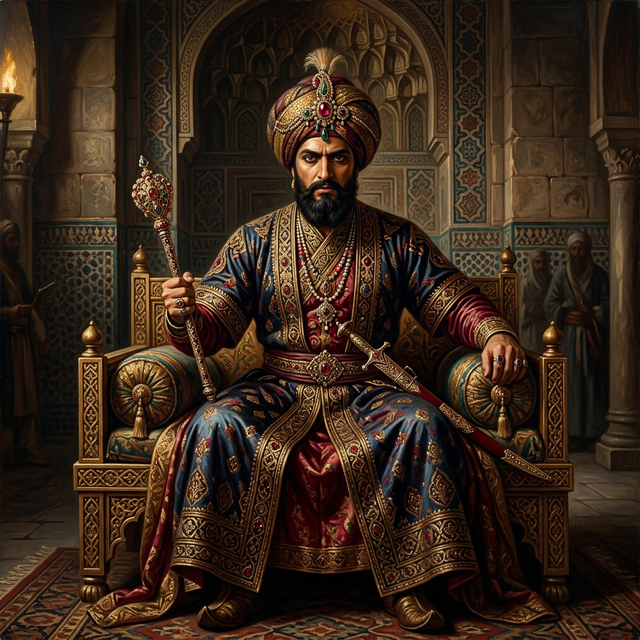
Historical portrait of Muhammad bin Tughlaq, Sultan of the Delhi Sultanate (1325–1351 CE) — depicted in period-authentic Sultanate attire with turban and robe, seated on a throne with Islamic geometric architecture in the background, oil painting style. Known as the most brilliant and most cruel of all Delhi Sultans.
👤 The Man Behind the Atrocities

Who Was Muhammad bin Tughlaq?

Born as Jauna Khan, Muhammad bin Tughlaq was the son of Ghiyasuddin Tughlaq — whom he allegedly had killed to seize the throne. He is paradoxically described by contemporaries as both supremely intelligent and catastrophically cruel. He spoke multiple languages, debated theology, wrote poetry — and ordered mass executions on a whim.

Ibn Batuta, the Moroccan traveler who served in his court for years, recorded that bodies piled outside the palace so frequently that it became ordinary. Ziauddin Barani — who served him for seventeen years — documented his whims, his violence, and his failed experiments in vivid detail.

He was called Muhammad the Mad by some contemporaries. Modern historians debate whether his policies were visionary or simply catastrophic. This website provides the documented record — and leaves the verdict to the evidence.

Uncover the Truth →
🧭 Your Journey Through History

What This Encyclopedia Covers

Nine chapters that take you from the sanitized textbook version to the full, documented truth of what Muhammad bin Tughlaq actually did to India.

📖
The textbook myth vs. the documented chronicle reality
Chapter 1

The Official Narrative

How Indian textbooks portray Muhammad bin Tughlaq as an "eccentric visionary" while systematically concealing his documented mass executions, religious persecution, and catastrophic governance failures.

Uncover the truth
📅
26 years of disaster, year by year
Chapter 2

Timeline of Events

An interactive, chronological account of every major documented event during Muhammad bin Tughlaq's reign — from his accession in 1325 to the empire's disintegration and his death in 1351.

Walk through time
🏙️
The forced emptying of Delhi — India's largest city
Chapter 3

Forced Capital Transfer

In 1327, Muhammad bin Tughlaq forced the entire population of Delhi — India's largest city — to march 1,500km to Daulatabad. Thousands died en route. Ibn Batuta witnessed the aftermath. This chapter documents it all.

Read the accounts
⛓️
Mass executions, Jizya, and state-sanctioned oppression
Chapter 4

Religious Persecution

The documented persecution of Hindus, Jains, and even Muslims who disagreed with him. Barani records executions so frequent that the palace grounds were permanently stained. Temple desecration across Bengal and the Deccan.

Read the accounts
🎭
Temples, art, traditions — systematically destroyed
Chapter 5

Cultural Destruction

The documented destruction of Hindu temples across Bengal, Bihar, the Deccan, and Gujarat. The erasure of indigenous artistic traditions. How the Sultanate systematically uprooted the cultural fabric of Indian civilization.

Understand the loss
📉
The token currency disaster, famine, and economic collapse
Chapter 6

Economic Devastation

The token currency experiment that crashed India's economy. The Khorasan expedition that wasted the treasury. The Deccan famine that killed millions. A comprehensive accounting of the economic catastrophe of his reign.

See the collapse
📊
Data and numbers that quantify the scale of damage
Chapter 7

The Damage Quantified

Numbers, statistics, and documented figures that put the scale of destruction into perspective — deaths, temples destroyed, treasury losses, provinces lost, famines caused, and the long-term demographic impact.

See the numbers
🔗
How his reign weakened India and invited Timur's invasion
Chapter 8

Legacy & Modern Impact

How Muhammad bin Tughlaq's catastrophic reign fatally weakened the Delhi Sultanate, directly enabling Timur's devastating 1398 invasion. How his legacy is whitewashed today and why this matters for India's present.

Connect past to present
📚
Complete, verifiable bibliography of primary sources
Chapter 9

Sources & References

Every claim on this site is backed by primary sources — Barani's Tarikh-i-Firoz Shahi, Ibn Batuta's Rihla, Isami's Futuh-us-Salatin, and modern scholarship. Explore the complete, verifiable bibliography.

Verify the sources
The Sultan [Muhammad bin Tughlaq] was a man of great intellect but of ungoverned passions. He would punish men for the slightest offence — and the corpses of those he had executed piled up so frequently outside the palace gates that it became a common sight. In my time I saw great numbers put to death. There was not a day or night that some twenty or thirty people were not brought before him for questioning, and his orders were always for execution, torture, or mutilation. — Ibn Batuta, Rihla (c. 1354 CE) — eyewitness account from a Muslim traveler who served in Muhammad bin Tughlaq's court
Wikipedia: The Travels of Ibn Battutah
⚠️ Why This Matters Today

Muhammad bin Tughlaq is still taught in Indian textbooks as an "eccentric but visionary" ruler. His mass executions, forced displacement of millions, catastrophic economic experiments, and systematic religious persecution are either minimized or entirely omitted. Meanwhile, the physical evidence — the ruins of Daulatabad, the deserted quarter of medieval Delhi, the demographic collapse of the 14th century — speaks for itself. This website restores what the textbooks deliberately erased. This project is part of the Bharat Files Initiative.

🔍 Textbook vs. Reality

The Two Faces of Muhammad bin Tughlaq

One version lives in school textbooks. The other is documented in primary historical sources written by men who served in his own court.

📗
What Textbooks Say
  • "Visionary but eccentric ruler"
  • "Aimed to extend the empire southward"
  • "Introduced progressive administrative reforms"
  • "Patron of learning — spoke Arabic, Persian, mathematics"
  • "His capital transfer was an ambitious but failed experiment"
  • "Token currency was an innovative economic idea"
📕
What History Documents
  • Possibly killed his own father Ghiyasuddin Tughlaq to seize the throne — Ibn Batuta's account
  • Forced Delhi's entire population to march 1,500km to Daulatabad — thousands died en route
  • Token currency collapsed the economy — people lost everything; Barani documents it in detail
  • Daily executions — Ibn Batuta personally witnessed bodies piled at the palace gates
  • Caused a famine that killed millions in the Deccan through taxation and forced relocation
  • Wasted the treasury on the ill-fated Khorasan expedition with 370,000+ troops
  • By his death, he had lost Bengal, the Deccan, and the Sultanate was fatally weakened — enabling Timur's 1398 invasion
🔗 Further Reading

Bharat Files Sister Projects

Muhammad bin Tughlaq was not an isolated figure. Explore how other rulers of the Delhi Sultanate era caused similar damage to India's civilization, culture, and heritage.

Tughlaq Dynasty

Ghiyasuddin Tughlaq

The father who founded the dynasty — and whom Muhammad bin Tughlaq possibly had killed to seize power.

ghiyasuddintughlaq.com →
Tughlaq Dynasty

Firoz Shah Tughlaq

The successor who reimposed Jizya, enslaved 180,000 people, and personally boasted of temple destructions.

firozshtughlaq.com →
Delhi Sultanate

Alauddin Khilji

The predecessor who sacked Chittor, crushed Hindu kingdoms, and established the system of oppression Muhammad inherited.

alauddinkhilji.com →
🕯️ Education is the First Step

History Forgotten is History Repeated

This website exists because every Indian has the right to know their true history. Every claim is backed by primary historical sources. Every fact is verifiable. Begin your journey through the chapters that textbooks left out.